The Ultimate Guide to Precast Concrete Wall Panel Making Machines: Revolutionizing Modern Construction in 2026
The construction industry is undergoing a significant transformation, driven by rising demand for faster, more efficient, and more sustainable building methods. At the heart of this shift is the precast concrete wall panel making machine, a piece of industrial technology that is reshaping how walls are manufactured and installed around the world. For contractors, developers, and equipment buyers looking to stay competitive, understanding how this machinery works — and how to choose the right supplier — is essential. This guide walks through the technology, the applications, the buying considerations, and the leading solutions in the industry, with a focus on the equipment offered by Công ty TNHH Thiết bị Máy móc KZONG Trịnh Châu.
1. What Is a Precast Concrete Wall Panel Making Machine?
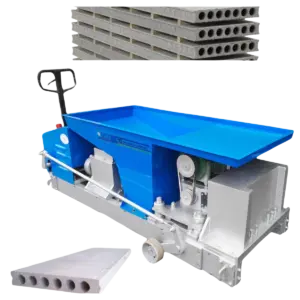
A precast concrete wall panel making machine is specialized equipment used to manufacture concrete wall panels in a controlled factory environment rather than on the construction site itself. Once cured, the finished panels are transported to the job site and installed using cranes or lifting equipment, dramatically shortening the on-site construction schedule.
This “build in a factory, assemble on site” approach — often called prefabricated or off-site construction — offers several structural advantages over traditional cast-in-place methods, including tighter quality control, more consistent panel dimensions, reduced labor requirements at the job site, and less exposure to weather-related delays.
2. How the Extrusion Process Works
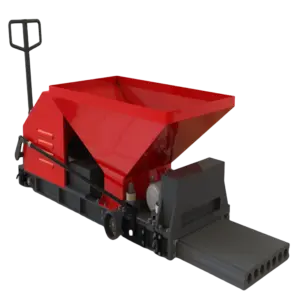
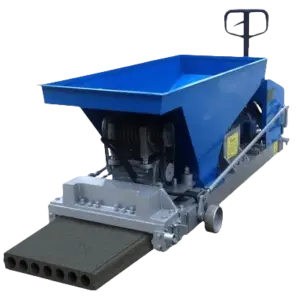
Among the different types of panel-forming technology, the extrusion-type precast concrete wall panel machine represents the most advanced approach available today. Unlike older pulling-mold or pushing machines, which rely on static molds and manual demolding cycles, extrusion machines continuously form panels as concrete is pushed through a shaping die — similar in principle to how an extruder shapes dough or metal.
The system is built around three integrated components:
- Power system – drives the mechanical components of the machine and regulates the speed of material feed.
- Extrusion system – a set of high-speed rotating augers that compact the concrete mix and force it into the molding cavity under continuous pressure.
- Vibration system – a high-frequency vibration motor that further consolidates the mixture as it exits the die, eliminating air pockets and internal voids.
The combination of auger compaction and high-frequency vibration produces a panel that is dense, structurally strong, and has a smooth, wrinkle-free surface straight out of the machine — a strong visual indicator of manufacturing quality and one of the reasons extrusion panels typically require less surface finishing before installation.
3. Extrusion vs. Pulling-Mold vs. Pushing Machines
| Feature | Extrusion Machine | Pulling-Mold Machine | Pushing Machine |
|---|---|---|---|
| Production method | Continuous forming | Mold pulled after casting | Panel pushed out of fixed mold |
| Surface finish | Smooth, minimal finishing needed | Moderate, mold marks possible | Moderate |
| Production speed | High (continuous) | Medium | Medium |
| Panel density/strength | High, due to auger + vibration | Depends on vibration table | Depends on compaction method |
| Automation potential | High | Medium | Medium |
| Best suited for | High-volume factory production | Small-to-mid batch production | Small-to-mid batch production |
For manufacturers planning high-throughput operations, extrusion technology generally delivers the best combination of speed, consistency, and finished surface quality.
4. Applications of Extruded Wall Panels
The versatility of the precast concrete wall panel machine allows manufacturers to produce both hollow-core and solid panels, tailored to project requirements. These panels are primarily designed for non-load-bearing use, which makes them well suited to a wide range of frame-structure buildings, such as:
- Residential apartment buildings
- Office towers and commercial complexes
- Shopping centers and retail developments
- Hospitals and healthcare facilities
- Industrial workshops and warehouses
- Precast boundary and perimeter walls
- Foundation templates and formwork
Because the panels are non-load-bearing, they’re typically used as internal partitions and external cladding within a structural frame — reducing the load on the building’s primary structure while still delivering durability and sound/thermal insulation performance.
5. Technical Specifications at a Glance
While exact specifications vary by model and manufacturer, extrusion-type wall panel machines typically fall within these general ranges:
| Thông số kỹ thuật | Typical Range |
|---|---|
| Panel width | 60 cm (standard) |
| Panel thickness | 60 mm – 200 mm |
| Daily output (single machine) | Up to 500 m² per working day |
| Panel type | Hollow-core or solid |
| Raw material compatibility | Ordinary concrete, lightweight aggregate concrete |
Buyers should always request a detailed spec sheet from their chosen supplier, since output capacity, panel dimensions, and power requirements can vary depending on the specific model and configuration.
6. Raw Materials and Panel Customization
One of the strongest selling points of modern extrusion machines is their flexibility with raw materials. In addition to ordinary Portland cement concrete, these machines can process a range of lightweight aggregates, including:
- Industrial slag
- Waste/recycled concrete
- Ceramsite (lightweight expanded clay aggregate)
- Volcanic rock aggregate
- Expanded perlite
This flexibility allows manufacturers to adjust panel weight, insulation performance, and cost depending on regional material availability and project specifications — an especially valuable feature for companies pursuing more sustainable or recycled-content construction materials.
7. Key Benefits for Contractors and Manufacturers
- Speed: A single extrusion machine can produce up to 500 m² of wall panels per working day, significantly compressing production timelines compared to on-site casting.
- Surface quality: The auger-and-vibration process produces a smooth, wrinkle-free finish that reduces or eliminates the need for secondary finishing work.
- Structural consistency: Factory-controlled conditions mean less variability from panel to panel compared to on-site pours, which are more exposed to weather and labor inconsistency.
- Material flexibility: Compatibility with lightweight and recycled aggregates supports both cost control and sustainability goals.
- Design flexibility: Adjustable thickness (60–200 mm) and hollow or solid configurations let manufacturers serve a wide range of project types from a single machine platform.
8. How to Choose the Right Machine and Supplier
When evaluating a precast concrete wall panel making machine supplier, consider the following:
- Production capacity vs. your project pipeline — match the machine’s daily output to your realistic demand, with room to scale.
- After-sales support and spare parts availability — extrusion equipment involves wear components (dies, augers, vibration motors) that need periodic replacement.
- Installation and training support — confirm whether the supplier provides on-site commissioning and operator training.
- Track record and references — ask for case studies or existing customers in a market similar to yours.
- Customization options — confirm the machine can be configured for your target panel thickness, width, and raw material mix.
- Total cost of ownership — factor in energy consumption, maintenance costs, and expected machine lifespan, not just the upfront purchase price.
9. Maintenance and ROI Considerations
Like any heavy industrial equipment, extrusion wall panel machines require routine maintenance to sustain output quality and minimize downtime. Typical maintenance considerations include:
- Regular inspection and replacement of auger components subject to wear from continuous concrete contact
- Lubrication and mechanical checks on the power system
- Calibration of the vibration system to maintain consistent panel density
- Monitoring of the extrusion die for wear that could affect panel dimensions or surface finish
A well-maintained machine, paired with a reliable supplier offering responsive after-sales service, is central to achieving a strong return on investment over the equipment’s operating life.
10. Why Choose Công ty TNHH Thiết bị Máy móc KZONG Trịnh Châu.?
When investing in a precast concrete wall panel making machine, selecting a reliable manufacturer is just as important as selecting the right technology. Công ty TNHH Thiết bị Máy móc KZONG Trịnh Châu. has positioned itself as a manufacturer in the precast concrete machinery industry, with a stated focus on quality, durability, and customer support.
Working with KZONG Machinery means partnering with a supplier that aims to offer more than equipment alone — including technical guidance during the selection process and after-sales service intended to support long-term, reliable operation. The company markets itself to both large-scale industrial producers and smaller precast plants looking to enter or expand within the prefabricated construction market.
Note: Prospective buyers should independently verify current specifications, certifications, warranty terms, and customer references directly with the supplier before making a purchasing decision.
11. Conclusion
Cái precast concrete wall panel making machine has become an important tool for construction companies pursuing faster, more consistent, and more sustainable building methods. Understanding how extrusion technology works — and knowing what to look for in a supplier — puts buyers in a stronger position to choose equipment that fits their production goals and project pipeline. As prefabricated construction continues to grow globally, manufacturers like Công ty TNHH Thiết bị Máy móc KZONG Trịnh Châu. are positioning themselves to serve this expanding market.
Câu hỏi thường gặp
1. Máy sản xuất tấm tường bê tông đúc sẵn là gì? It’s industrial equipment used to manufacture concrete wall panels in a factory setting. The finished panels are then transported to a construction site for installation, rather than being cast in place.
2. Nguyên lý hoạt động của máy sản xuất tấm tường đùn là gì? The machine’s power system drives high-speed augers that compact and extrude concrete into a molding cavity, while a vibration system further consolidates the mixture — producing a dense, strong panel with a smooth surface finish.
3. Có thể sử dụng những nguyên liệu thô nào? Các máy móc này có thể gia công cả bê tông thông thường lẫn bê tông cốt liệu nhẹ, sử dụng các vật liệu như xỉ công nghiệp, bê tông thải/tái chế, gạch xốp, đá núi lửa và perlit nở.
4. Có những kích thước tấm nào? Chiều rộng tiêu chuẩn của tấm thường là 60 cm, với độ dày dao động từ 60 mm đến 200 mm tùy theo yêu cầu của dự án.
5. Thiết bị này có hiệu suất như thế nào? Một máy có thể sản xuất tối đa 500 mét vuông tấm ốp tường mỗi ngày làm việc, mặc dù sản lượng thực tế phụ thuộc vào từng mẫu máy cụ thể, thông số kỹ thuật của tấm ốp và điều kiện vận hành.
6. What’s the difference between extrusion, pulling-mold, and pushing machines? Extrusion machines form panels continuously through a die, generally offering higher speed and a smoother finish. Pulling-mold and pushing machines use fixed molds and are typically better suited to smaller production volumes. See the comparison table above for details.
7. Are these panels load-bearing? No — these panels are designed primarily for non-load-bearing applications, such as internal and external partition walls within frame-structure buildings.
8. Why should I choose Zhengzhou KZONG Machinery Equipment Co., Ltd.? KZONG Machinery positions itself as a manufacturer focused on durable, precise equipment backed by technical support and after-sales service. As with any major equipment purchase, buyers should verify specifications, certifications, and references directly with the company.