Trạm trộn bê tông rao bán: Hướng dẫn mua hàng toàn diện bao gồm cả máy trộn bê tông
Whether you are bidding on a highway project, setting up a ready-mix concrete operation, supplying a precast concrete factory, or managing a fast-track infrastructure program, one decision sits at the foundation of your entire concrete supply chain: choosing the right concrete batching plant for sale.
Get it right, and your plant delivers consistent, high-quality concrete on demand, keeps your projects on schedule, and generates a strong return on investment for years. Get it wrong, and you face production downtime, quality failures, cost overruns, and the operational headache of a machine that never quite matches your project’s needs.
This complete buyer’s guide covers every critical aspect of selecting concrete batching plants for sale — plant types, mixer options, key systems, full model specifications, maintenance best practices, and a step-by-step selection framework — so you can make a confident, well-informed purchasing decision.
What Is a Concrete Batching Plant?
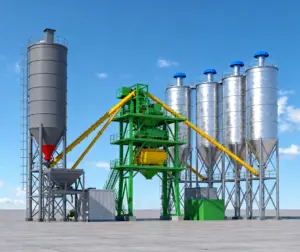
A concrete batching plant is a specialized manufacturing facility that combines raw materials — cement, aggregates (sand, gravel, crushed stone), water, and chemical admixtures — in precisely controlled proportions to produce concrete efficiently and uniformly at the required output rate.
Unlike a simple on-site concrete mixer, a concrete batching plant integrates material storage, automated weighing, mixing, and discharge into a coordinated production system controlled by a computerized batching program. This integration is what allows a batching plant to produce large volumes of consistent, specification-grade concrete at the output rates required by major infrastructure and construction projects.
Concrete batching plants are used across virtually every major construction sector: tunnels, bridges, railways, highways, airports, ports, dams, high-rise buildings, residential developments, and precast concrete manufacturing facilities.
Types of Concrete Batching Plants for Sale
When evaluating concrete batching plants for sale, the first decision is which plant type matches your project profile. There are four primary categories, each optimized for a different set of operational requirements.
Stationary Concrete Batching Plant
A stationary plant is permanently installed on a prepared foundation at a fixed production location. Once commissioned, it is not designed to be relocated during the project’s operational life.
Key characteristics:
- Production capacity: 25 m³/h to 240 m³/h
- Setup time: 10 to 60 days (depending on scale and foundation work)
- Requires fixed foundation installation
- Lower flexibility — relocation is difficult once installed
- Highest production capacity and output consistency in its class
Best applications: Large-scale infrastructure projects (highways, bridges, airports, large dams), commercial ready-mix concrete operations, precast concrete manufacturing plants, and any long-duration project where a single fixed production location serves the entire project.
The stationary plant’s output range — from the compact AJ-25 at 25 m³/h up to the high-capacity AJ-240 at 240 m³/h — covers everything from small precast operations to major commercial ready-mix plants. For the largest infrastructure programs, stationary plants with SICOMA twin-shaft mixers (models AJ-120 and AJ-180) deliver the precision, output consistency, and durability that major projects demand.
Mobile Concrete Batching Plant
A mobile plant is designed to be relocated between project sites without a permanent foundation. It arrives largely pre-assembled, is set up quickly, and can be moved when the project moves.
Key characteristics:
- Production capacity: 60 m³/h to 120 m³/h (mobile series); 25 m³/h to 100 m³/h (compact mobile KZ series)
- Setup time: 7 to 45 days
- No permanent foundation required
- High flexibility — can be relocated as project requirements change
- Faster commissioning than stationary plants
Best applications: Road maintenance and rural road construction programs, temporary construction sites, multi-site projects where the plant must follow the work front, and smaller building projects where the production duration does not justify a stationary installation.
The KZ series (KZ-25 through KZ-100) represents the compact mobile range — purpose-built for projects that need rapid setup, efficient concrete production, and the ability to relocate without major civil works. The KZ-35’s successful delivery for roadbed paving in Malaysia, set up and operational within 10 days despite complex terrain, illustrates the practical advantage of this plant type in time-pressured environments.
Wet Mix Concrete Batching Plant
A wet mix plant produces fully mixed, ready-to-pour concrete within the plant itself. All materials — aggregates, cement, water, and admixtures — are weighed and mixed inside the plant, and the finished concrete is discharged directly into transit mixer trucks for delivery to the pour location.
Key characteristics:
- Production capacity: 25 m³/h to 240 m³/h
- All ingredients are mixed inside the plant under controlled conditions
- Superior quality control — uniformity and consistency are maximized
- More complex equipment configuration (requires mixer, water supply, and admixture dosing systems)
- Higher initial equipment investment than dry mix plants
Best applications: High-rise buildings, large infrastructure projects, bridges, tunnels, and any application where concrete quality, uniformity, and consistency are paramount. Wet mix plants are the standard choice for commercial ready-mix concrete operations supplying multiple construction sites.
Dry Mix Concrete Batching Plant
A dry mix plant batches and proportions all dry materials within the plant, loading them into a transit mixer truck where water and liquid admixtures are added during transportation or upon arrival at the site.
Key characteristics:
- Production capacity: 25 m³/h to 180 m³/h
- Simpler equipment configuration — no mixing system required at the plant
- Lower initial investment than wet mix plants
- Concrete uniformity depends on the mixing efficiency of the transit mixer truck
- Better suited to shorter transport distances
Best applications: Projects where concrete quality requirements are less stringent, where the construction site has its own mixing capability, or where the simplicity and lower cost of the dry mix system outweighs the quality advantage of wet mixing.
Concrete Mixer for Sale: The Heart of Every Batching Plant
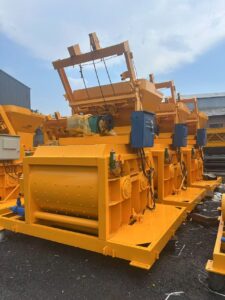
The concrete mixer is the most critical performance component within any batching plant. When evaluating concrete mixers for sale — whether as part of a complete plant or as a standalone unit — understanding the mixer type and its output characteristics is essential to predicting the quality and consistency of the finished concrete.
Twin-Shaft Compulsory Mixer (JS Series)
The JS twin-shaft forced mixer is the standard mixer used in small to medium capacity batching plants (AJ-25 through AJ-90 and AJY series). Twin counter-rotating mixing shafts carry paddles that aggressively mix the concrete batch in a trough-shaped mixing drum.
Key advantages:
- Excellent mixing performance across ordinary and specialty concrete mixes
- Short mixing cycle times (60–72 seconds per batch)
- Strong adaptability for concrete with large aggregate sizes (up to Φ80 mm)
- Available in output sizes from JS500 (500-litre batch) to JS2000 (2,000-litre batch)
KZJ Twin-Shaft Mixer (KZJ Series)
For high-capacity stationary plants (KZJ-120 and KZJ-180), SICOMA twin-shaft mixers are specified. KZJ is a globally recognized premium mixer brand, and its KZJ series represents the benchmark for large-scale ready-mix and infrastructure concrete production.
Key advantages:
- Exceptionally uniform mixing at high batch volumes (2,000–3,000 litres per batch)
- Superior durability for continuous high-output operation
- Preferred by commercial ready-mix operations and major infrastructure projects where concrete quality consistency is non-negotiable
Planetary Concrete Mixer
A planetary mixer uses a sun-and-planet orbital mixing action to produce an exceptionally homogeneous mix. It is particularly well-suited to specialty concrete mixes — self-compacting concrete, fiber-reinforced concrete, and other technically demanding formulations.
Drum Mixer
Drum mixers rotate a tilted cylindrical drum to mix concrete by lifting and dropping the materials. They are simpler in construction and suited to lower-output applications where the mixing intensity of a forced mixer is not required.
When purchasing a concrete mixer for sale as a standalone unit, the same selection criteria apply: match the mixer type to the concrete specification you need to produce, and match the mixer volume and cycle time to your required hourly output.
Full Model Specifications: Concrete Batching Plants for Sale
Stationary Plant Series (KZJ Models)
| Model | KZJ-25 | KZJ-35 | KZJ-50 | KZJ-75 | KZJ-90 | KZJ-120 | KZJ-180 |
|---|---|---|---|---|---|---|---|
| Output (m³/h) | 25 | 35 | 50 | 75 | 90 | 120 | 180 |
| Mixer | JS500 | JS750 | JS1000 | JS1500 | JS1500 | SICOMA MAO3000 | SICOMA MAO4500 |
| Mixer Power (kW) | 18.5 | 30 | 2×18.5 | 2×30 | 2×30 | 2×37 | 2×55 |
| Mixing Cycle (s) | 72 | 72 | 72 | 72 | 60 | 65 | 65 |
| Max Aggregate Size | Φ60 mm | Φ60 mm | Φ60 mm | Φ80 mm | Φ80 mm | Φ80 mm | Φ80 mm |
| Aggregate Bin (m³) | 3×3 | 3×5 | 3×8 | 3×12 | 4×15 | 4×15 | 4×20 |
| Max Discharge Height | 3.8 m | 4.1 m | 4.1 m | 4.1 m | 4.1 m | 4.3 m | 4.3 m |
| Install Power (kW) | ≈65 | ≈75 | ≈100 | ≈140 | ≈160 | ≈220 | ≈290 |
| Weight (ton) | ≈15 | ≈18 | ≈23 | ≈30 | ≈68 | ≈93 | ≈101 |
Mobile Plant Series (AJY Models)
| Model | KZJY-25 | KZJY-35 | KZJY-50 | KZJY-75 | KZJY-100 |
|---|---|---|---|---|---|
| Output (m³/h) | 25 | 35 | 50 | 75 | 100 |
| Mixer | JS500 | JS750 | JS1000 | JS1500 | JS2000 |
| Mixing Cycle (s) | 72 | 72 | 72 | 72 | 72 |
| Aggregate Bin (m³) | 4×4 | 4×4 | 4×5 | 4×6 | 4×8 |
| Cement Silo (ton) | 1×50 | 1×100 | 1×100 | 2×100 | 3×100 |
| Aggregate Weighing | 2×900 kg ±2% | 2×900 kg ±2% | 2×1,200 kg ±2% | 2×1,800 kg ±2% | 2×2,400 kg ±2% |
| Cement Weighing | 350 kg ±1% | 500 kg ±1% | 600 kg ±1% | 1,000 kg ±1% | 1,200 kg ±1% |
| Water Weighing | 200 kg ±1% | 200 kg ±1% | 350 kg ±1% | 450 kg ±1% | 550 kg ±1% |
| Install Power (kW) | ≈65 | ≈75 | ≈90 | ≈125 | ≈180 |
| Weight (ton) | ≈15 | ≈20 | ≈25 | ≈31 | ≈37 |
The Six Core Systems of a Concrete Batching Plant
Understanding the six functional systems that make up a concrete batching plant is essential both for evaluating equipment quality and for understanding the maintenance responsibilities of ownership.
1. Mixing System
The mixing system is the production heart of the plant — the compulsory concrete mixer that combines all weighed materials into a homogeneous batch. Mixer type (twin-shaft JS, KZJY, planetary, or drum) determines the mixing quality achievable and the range of concrete specifications the plant can produce. A high-performance mixing system ensures concrete uniformity and enables the plant to handle specialty mixes.
2. Storing System
Raw materials must be stored in correct conditions before batching. Aggregates are typically stored in open-air bays. Cement, fly ash, and other powders are stored in closed steel silos equipped with digital level indicators so operators always know the remaining stock. Admixtures are stored in sealed steel containers. The cement silo capacity typically ranges from 20 to 200 tons and can be customized to match the plant’s consumption rate and the logistics of cement delivery to the site.
3. Weighing System
The weighing system is the quality-critical component of the plant — the component that most directly determines the strength, workability, and durability of the concrete produced. Weighing is divided into three streams: aggregate weighing, powder weighing (cement, fly ash, slag), and liquid weighing (water and admixtures). All weighing operations occur simultaneously, controlled by the computer batching program. The operator inputs the mix design, and the system automatically targets the specified weights for each ingredient. Typical weighing accuracies are ±2% for aggregates and ±1% for cement, water, and admixtures.
4. Batching System
The aggregate batching machine combines two to six aggregate types — sand, various stone sizes, gravel, fly ash, and cement — in the correct proportions for the target concrete mix. Two-bin, three-bin, four-bin, and five-bin batching machines are available to match the number of aggregate types in the mix design.
5. Conveying System
The conveying system moves materials from storage to the mixer. Aggregates are conveyed by hopper or belt conveyor — hoppers are compact and low-cost; belt conveyors are higher-speed and suited to longer transport distances. Water and liquid admixtures are pumped. Cement is transported from the silo to the mixer via a screw conveyor.
6. Control System
The entire plant is managed from a computerized control room equipped with air conditioning for operator comfort. The microcomputer control system manages all batching sequences automatically based on the input mix design. A manual override capability allows the operator to control the plant manually if required. The control system is the operational nerve center of the plant — its reliability and ease of use directly affect the efficiency and consistency of daily production operations.
How a Concrete Batching Plant Works: Four-Step Production Process
The concrete production cycle in any concrete batching plant for sale follows four fundamental steps:
Step 1 — Materials Feeding A wheel loader transfers aggregates (pebbles, sand, crushed stone) from the stockpile into the aggregate batching machine’s hoppers. Cement is delivered by tanker truck and pneumatically transferred into the cement silo.
Step 2 — Weighing and Batching The computer batching program opens the aggregate batching machine’s gates in sequence, allowing each aggregate type to discharge into the weighing hopper until the target weight is reached. Simultaneously, cement is weighed via the screw conveyor system and water is measured by the liquid weighing system. All weighing streams operate in parallel to minimize the batching cycle time.
Step 3 — Mixing Once all materials have been weighed and transferred to the mixer, the mixing cycle begins. The mixer shafts rotate at high speed, forcing all materials into contact and producing a homogeneous concrete batch within a 60 to 72-second mixing cycle.
Step 4 — Discharging and Delivery The finished concrete batch is discharged from the mixer outlet into a transit mixer truck (for ready-mix operations) or directly into the application equipment (for on-site pours). For precast operations, concrete is discharged into hoppers or conveyor systems feeding the precast casting area.
Ready-Mix vs. Precast: Choosing the Right Plant Configuration
Not all concrete batching plants for sale are configured the same way — and the right configuration depends fundamentally on whether you are producing ready-mix concrete for on-site delivery or concrete for a precast manufacturing operation.
Ready-Mix Concrete Production Recommended capacities: 90, 120, 180, or 240 m³/h (models KZJ-90, KZJ-120, KZJ-180, KZJ-240). The plant produces wet mixed concrete that is loaded directly into transit mixer trucks and delivered to construction sites for in-situ pouring into formwork. High output capacity and consistency are the primary requirements. These plants are suited to large construction projects and infrastructure development where significant volumes of on-site poured concrete are required continuously.
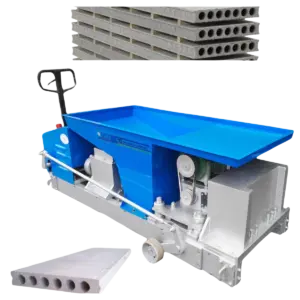
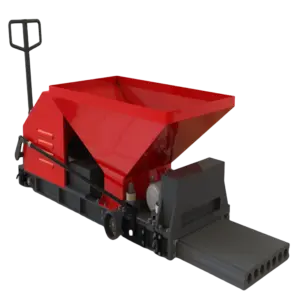
Precast Concrete Production Recommended capacities: 25, 35, 50, 75, 90, 120, or 180 m³/h (models KZJ-25 through KZJ-180). The plant produces concrete for casting into moulds or extrusion machines within a precast manufacturing facility. Output volumes are typically lower than ready-mix operations, but concrete quality consistency — particularly water-cement ratio control — is critical for achieving the design strengths required in prestressed precast elements. The plant configuration includes the mixer, silos, and batching system, and is integrated with the precast factory’s casting equipment, steam curing systems, and storage yard.
Key Benefits of Choosing a Complete Batching Plant Solution
Purchasing a complete, matched equipment solution from a single supplier — rather than sourcing individual components from multiple vendors — delivers a set of compounding operational advantages:
Speed of Project Completion — All systems are pre-matched and optimized to work together, reducing commissioning time and eliminating compatibility issues between components.
Consistent Concrete Quality — Automated batching and mixing systems eliminate human measurement error, producing uniform concrete quality batch after batch.
Cost Savings — Consolidated procurement, optimized resource utilization, reduced waste, and lower operational costs contribute to overall budget efficiency across the plant’s working life.
Increased Productivity — High-capacity equipment, short mixing cycle times, and minimized downtime deliver greater production throughput and the ability to meet high-demand schedules.
Flexibility and Scalability — Complete solutions can be configured for the current project scale and expanded as demand grows.
Environmental Compliance — Integrated dust removal systems, water recycling, and closed silo storage help meet local environmental regulations and reduce the plant’s ecological footprint.
Comprehensive After-Sales Support — A single-supplier solution means one point of contact for operator training, spare parts supply, and technical service — simplifying long-term plant management.
Concrete Batching Plant Maintenance: Essential Practices for Long-Term Reliability
Owning concrete batching plants for sale is an investment that must be protected through disciplined maintenance. Key practices include:
Daily Inspection and Cleaning Inspect all systems — mixer, conveyors, weighing hoppers, and control panels — for wear, damage, or concrete buildup. Remove hardened concrete residue from the mixer, chutes, and discharge areas daily using high-pressure water or mechanical tools. Hardened buildup reduces mixing effectiveness and can damage mixer paddles.
Consistent Lubrication All rotating components — mixer shafts, conveyor rollers, and bearings — must be lubricated on the schedule recommended by the manufacturer. Correct lubrication is the single most effective practice for extending the service life of moving parts.
Weighing System Calibration Calibrate all weighing systems — aggregate, cement, water, and admixture — regularly to maintain batch accuracy. Check sensors and load cells for damage or obstruction. Inaccurate weighing is the leading cause of out-of-specification concrete.
Electrical System Inspection Check all wiring, connections, and control panel components regularly for wear, corrosion, and loose connections. Maintain the control panel in clean, dry condition.
Silo Maintenance Ensure cement and fly ash silos are sealed against moisture ingress. Damp cement clumps and blocks the screw conveyor, causing production downtime. Inspect pressure relief valves on silos regularly.
Conveyor Belt Inspection Check belts for wear, tears, and misalignment. Replace damaged belts promptly. Lubricate rollers and pulleys regularly to prevent slippage and premature wear.
Dust Control System Maintenance Maintain the dust collection system to comply with environmental regulations and protect worker health. Clean or replace filters on the schedule specified by the manufacturer.
How to Choose the Right Concrete Batching Plant for Sale
The selection of a concrete batching plant for sale should follow a structured evaluation process covering eight key decision factors:
1. Confirm Project Requirements Define your required concrete production volume (m³/h), the concrete mix types you will produce, and how finished concrete will be delivered to the pour or casting location. This determines the minimum plant output capacity and mixer type required.
2. Assess Site Conditions Evaluate the available space, access routes for material delivery and concrete dispatch, utility connections (power supply voltage and capacity), and local environmental regulations. Site constraints may eliminate some plant types from consideration.
3. Decide on Plant Type Choose between stationary, mobile, wet mix, or dry mix based on project duration, mobility requirements, and the concrete quality specification you must achieve. Long-duration fixed-location projects favor stationary plants; multi-site or short-duration projects favor mobile plants.
4. Evaluate Automation Level Higher automation reduces operator dependency and human error, improves batch consistency, and simplifies quality records management. For operations supplying certified concrete to infrastructure projects, advanced automation with full production data logging is typically required.
5. Consider Maintenance Requirements Evaluate the accessibility of serviceable components and the availability of spare parts in your market. The lowest-capital-cost plant may generate the highest total operating cost if parts are difficult to source or if maintenance complexity causes frequent downtime.
6. Assess Environmental Compliance Confirm that the plant’s dust removal system, noise specification, water recycling provisions, and waste disposal arrangements meet the environmental regulations applicable to your operating location.
7. Examine Supplier Reputation and After-Sales Support Select a manufacturer with a proven global track record, documented project references in your region, a comprehensive after-sales service program, and accessible spare parts supply. Long-term plant reliability depends as much on after-sales support as on initial equipment quality.
8. Calculate Total Cost of Ownership Compare the initial purchase price against the projected long-term operating costs — power consumption, maintenance labor, spare parts, and consumables. A higher-specification plant with lower operating costs and longer service life typically delivers a better total return on investment than a lower-price plant with higher ongoing costs.
Global Project References: Proven Performance Worldwide
The best evidence of a plant’s real-world performance is its track record in the field. Leading batching plant manufacturers have delivered systems to over 100 countries across Asia, Africa, the Middle East, Europe, North America, South America, and Oceania — from compact KZJ-25 units for small community projects in East Timor and Dominica, to high-capacity KZJ-240 plants serving major infrastructure programs in the USA and Singapore.
This global deployment record demonstrates that well-engineered concrete batching plants for sale can be successfully commissioned and operated across the full range of climates, construction environments, logistics challenges, and regulatory requirements encountered worldwide.
Câu hỏi thường gặp
Q: What is the difference between a batching plant and a mixing plant? A: The terms are often used interchangeably, but strictly speaking, a batching plant measures and proportions raw materials (batching), while a mixing plant also mixes them. A wet mix concrete batching plant includes both batching and mixing functions. A dry mix plant batches materials without fully mixing them — final mixing occurs in the transit mixer truck.
Q: How long does it take to install a concrete batching plant? A: Installation time varies by plant type and scale. Mobile plants (KZJY series) can be set up in 7 to 45 days. Stationary plants require 10 to 60 days depending on the scale and the extent of foundation and civil works required. Larger plants with SICOMA mixers at the upper end of the capacity range require the longer installation periods.
Q: Can I use the same batching plant for both ready-mix and precast concrete production? A: Yes. The plant itself produces concrete regardless of its final application. The distinction between ready-mix and precast production lies in how the finished concrete is used downstream — delivered in transit mixer trucks for ready-mix, or cast into moulds and extruded in a precast factory. Many plants serve both purposes simultaneously.
Q: What concrete mixer for sale is best suited to high-quality infrastructure concrete? A: For the highest-quality concrete in major infrastructure applications, a KZJ twin-shaft compulsory mixer (as used in the KZJ-120 and KZJ-180 models) is the industry benchmark. For standard residential and commercial concrete production, the JS twin-shaft series delivers excellent performance across a wide range of mix designs.
Q: How important is after-sales support when buying a concrete batching plant? A: Extremely important. A concrete batching plant is a complex, high-utilization piece of capital equipment. Downtime directly affects project timelines and revenue. The ability to access technical support, receive spare parts quickly, and get expert assistance with operational issues is as important as the initial equipment quality when evaluating concrete batching plants for sale.
Kết luận
Choosing the right concrete batching plant for sale — and the right concrete mixer for sale — is one of the highest-leverage decisions in any concrete construction or manufacturing operation. The plant type, capacity, mixer specification, automation level, and supplier support capability all combine to determine how efficiently your operation produces concrete, how consistently it meets quality specifications, and how reliably it performs over its operational life.
Whether you need a compact mobile KZJY-25 for a rural road project, a mid-range KZJ-90 stationary plant for a precast manufacturing facility, or a high-capacity KZJ-180 with KZJ mixer for a commercial ready-mix operation, matching the plant specification to your actual production requirements — and backing it with the right after-sales support — is the foundation of a productive, profitable, and long-lasting concrete production investment.
For full specifications, customized solutions, and competitive pricing on concrete batching plants and concrete mixers, visit Công ty TNHH Thiết bị Máy móc KZONG Trịnh Châu.