Prekast Beton Sınır Duvarı Makinesi: Beton Çit Duvar Makinesi Çözümleri için Eksiksiz Kılavuz
If you’re looking for a fast, cost-effective, and durable way to build boundary walls, a precast concrete boundary wall machine is the answer. Whether for residential compounds, industrial perimeters, livestock enclosures, or temporary construction barriers, concrete fence wall machines have transformed how modern boundary walls are built — replacing slow, labor-intensive brickwork with precision-engineered precast panels produced at scale.
This guide covers everything you need to know: how these machines work, what types of wall panels and H-columns they produce, key applications, and how to choose the right system for your project.
What Is a Precast Concrete Boundary Wall Machine?
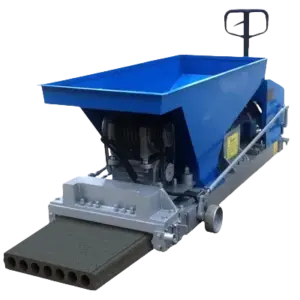
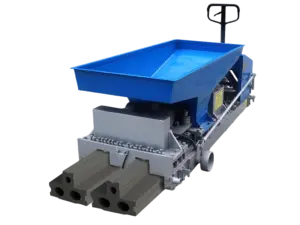
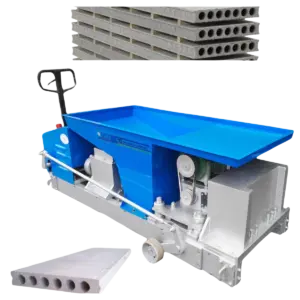
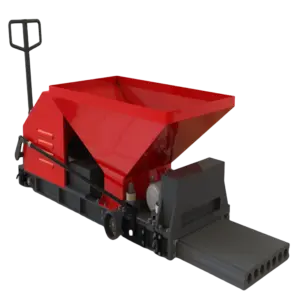
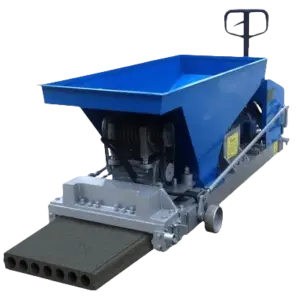
A precast concrete boundary wall machine is a specialized piece of manufacturing equipment used to produce hollow-core, pre-stressed concrete wall panels and supporting H-columns — the two main structural components of a precast concrete boundary wall system.
Unlike traditional cast-in-place concrete walls or brick masonry, precast boundary walls are manufactured off-site (or on-site in a dedicated casting yard), cured, and then assembled rapidly using interlocking panels and posts. The machine uses a concrete extrusion (pushing) method, reinforcing the panels with carbon steel prestress wires. Crucially, this process requires no mould or formwork, dramatically reducing material costs and production time.
The result is a consistent, structurally strong hollow-core concrete panel that can be cut to any required length and assembled like a modular system.
How Does a Concrete Fence Wall Machine Work?
A concrete fence wall machine (also called a boundary wall extrusion machine or compound wall machine) operates on the slip-form or extrusion principle:
- Concrete feeding — A dry or semi-dry concrete mix is fed into the machine’s hopper.
- Extrusion / pushing — The machine moves along a pre-tensioned steel casting bed, pushing and compacting concrete around prestressed carbon steel wires to form hollow-core panels or solid H-column profiles.
- No moulds required — Because the machine uses a self-supporting slip-form process, individual moulds are eliminated, and multiple panels can be cast simultaneously on a single casting bed.
- Curing — Panels cure on the casting bed (natural air curing or steam curing for faster turnaround).
- Cutting — Once cured, an automatic cutting machine cuts panels to the desired length.
- Installation — Wall panels are slid vertically into the grooves of pre-erected H-columns to assemble the boundary wall.
This workflow makes the precast concrete boundary wall machine one of the most efficient production systems in the concrete construction industry.
Two Types of Precast Concrete Boundary Wall Panels
A complete concrete fence wall machine system produces two main panel grades — light-duty and heavy-duty — to suit different project requirements.
1. Light-Duty Boundary Wall Panels
- Thickness: 50 mm
- Width: 300 mm (2 lanes cast at a time per casting bed)
- Length: Cut to requirement; typically 2.1 m for easy two-person manual handling during installation
- Supporting H-Column: 150 × 150 mm with a center hole for inserting and fixing MS angle brackets for barbed wire extension
- Best for: Residential boundary walls, garden or compound walls, lightweight perimeter fencing
The light-duty system is ideal for projects where panels need to be installed manually without lifting equipment, keeping installation labor costs low.
2. Heavy-Duty Boundary Wall Panels
- Thickness: 50 mm, 65 mm, 75 mm, 80 mm, 90 mm, 100 mm, and 120 mm
- Width: 500 mm to 600 mm
- Length: Custom-cut to project specification
- Installation: Requires lifting equipment due to panel weight
- Supporting H-Columns (two sizes):
- 180 × 200 mm — with interchangeable inserts to accommodate panel thicknesses of 50, 65, 75, and 80 mm
- 180 × 230 mm — with interchangeable inserts to accommodate panel thicknesses of 90, 100, and 120 mm
- Both column sizes feature a through-hole for MS angle fixing and barbed wire height extensions
The heavy-duty system is suited to industrial sites, security perimeters, livestock facilities, and high-traffic areas where greater structural integrity is required.
The H-Column Machine: The Backbone of the Boundary Wall System
Bu H-column machine (sometimes called the concrete fence post machine or concrete fence column machine) is an integral component of any precast concrete boundary wall machine setup.
H-columns serve as the structural posts that support and hold the wall panels in place. The panels slide into the grooves of the H-profile, creating a rigid, interlocking wall system without the need for mortar between panels.
Common H-column sizes include:
- 150 × 150 mm
- 200 × 200 mm
- 180 × 200 mm
- 180 × 230 mm
The size of the H-column is always matched to the thickness and weight of the wall panels it needs to support. Choosing the right column-to-panel ratio is essential for structural stability.
Wall Panel Extrusion: Two Production Methods
When using a concrete fence wall machine, wall panels can be produced by two slightly different methods:
Method 1 — Boundary Wall Extrusion Machine (Casting Bed) The machine pushes concrete along a pre-tensioned casting bed, forming hollow-core panels with prestressed wire reinforcement. This method produces panels quickly and continuously, with no individual moulds.
Method 2 — Wall Panel Extruder Machine An alternative extruder machine produces wall panels with an improved surface finish and more compact internal structure. This method is preferred when aesthetics matter (e.g., visible residential boundary walls) or when higher density panels are required.
Both methods are compatible with the same H-column system, giving manufacturers flexibility in their production line.
Key Applications of Precast Concrete Boundary Wall Machines
One of the biggest advantages of a precast concrete boundary wall machine is its versatility. The panels and columns it produces are used across a wide range of applications:
Residential and Compound Boundary Walls
The most common use — replacing traditional brick-and-mortar perimeter walls for residential homes, housing estates, and gated communities. Precast panels are faster to install, more consistent in quality, and lower in long-term maintenance cost.
Industrial and Commercial Perimeter Security
Heavy-duty panels provide robust perimeter security for factories, warehouses, logistics parks, and construction sites. Taller walls can be achieved by stacking panels and using barbed wire extensions on the H-columns.
Temporary Construction Site Walls
Precast boundary panels can be erected and dismantled quickly, making them ideal for temporary enclosures around active construction sites.
Livestock Fencing and Agricultural Enclosures
Concrete fence wall machine panels are widely used in livestock farming to create durable, hygienic, and low-maintenance animal enclosures — resistant to moisture, pests, and physical impact.
Household and Garden Walls
Lightweight panels offer a clean, finished appearance for household garden walls and courtyard enclosures.
Simple Housing and Rural Construction
In some markets, precast wall panels produced by a concrete fence wall machine are used as structural walls for simple low-cost housing, leveraging the same efficient production system.
Benefits of Using a Precast Concrete Boundary Wall Machine
Switching to a precast concrete boundary wall machine system offers substantial advantages over conventional construction methods:
No Mould Costs The slip-form extrusion process eliminates the need for individual panel moulds, significantly reducing per-unit production costs.
High Production Speed A single casting bed can produce large volumes of panels per day, far outpacing traditional bricklaying or cast-in-place methods.
Consistent Quality Machine-cast panels deliver uniform dimensions, surface finish, and structural strength — reducing site defects and rework.
Prestressed Strength Carbon steel wire reinforcement gives hollow-core panels high flexural strength relative to their weight, making them suitable for both light and heavy-duty applications.
Design Flexibility Panels can be cut to any length on-site using a concrete cutting machine, and wall height can be extended using MS angle brackets and barbed wire fixed into the H-column center holes.
Lower Labor Requirements Lightweight panels can be installed by just two workers without machinery. Even heavy-duty panels require minimal skilled labor once the H-columns are in place.
Long Service Life Precast concrete is inherently durable, weather-resistant, and low-maintenance compared to brick, timber, or metal fencing alternatives.
What Equipment Is Included in a Full Precast Concrete Boundary Wall Machine Line?
A complete production line for precast concrete boundary walls typically includes:
- Boundary wall extrusion machine (for wall panels)
- H-column machine (for fence posts)
- Concrete mixer (to prepare the mix)
- Prestress tension machine (for pre-tensioning carbon steel wires)
- Concrete cutting machine (for cutting panels to length after curing)
- Electric concrete dumper or diesel feeding dumper (for transporting mix to the machine)
- Wall installation trolley or installation machine (for erecting panels on-site)
Some manufacturers also offer plastic fence wall moulds as an alternative to extruded panels for decorative or lower-volume projects.
How to Choose the Right Concrete Fence Wall Machine
When selecting a precast concrete boundary wall machine for your operation, consider the following factors:
Panel Thickness Range Ensure the machine can produce the panel thicknesses required for your intended applications — from 50 mm light-duty to 120 mm heavy-duty panels.
Casting Bed Length Longer casting beds increase daily output capacity. Standard beds range from 60 m to 120 m.
H-Column Compatibility Verify that the H-column machine produces posts compatible with your wall panel thickness range, with interchangeable inserts if needed.
Üretim Kapasitesi Match machine output to your project pipeline or planned factory capacity.
After-Sales Support Choose a manufacturer that provides installation training, spare parts supply, and technical support — especially important for international buyers.
Complete Line vs. Individual Machines Some buyers need a full turnkey production line; others need only specific machines to complement existing equipment. Confirm what the supplier can provide.
Frequently Asked Questions About Precast Concrete Boundary Wall Machines
Q: Can the machine produce both light-duty and heavy-duty panels? A: Typically, light-duty and heavy-duty systems use different machine configurations. Some manufacturers offer machines adjustable for multiple thicknesses, while others supply separate machines for each range.
Q: Do I need a mould for every panel? A: No. The core advantage of the extrusion-based concrete fence wall machine is that it requires no individual panel moulds. Panels are continuously cast along a prestressed casting bed.
Q: What is the standard panel length? A: Panel length is flexible — panels are cut to the required length after curing using a concrete cutting machine. A common standard length for light-duty panels is 2.1 m for easy manual handling.
Q: How long does it take to install a precast concrete boundary wall? A: Once panels and H-columns are produced and cured, installation is rapid. A crew of 2–4 workers can erect hundreds of meters of boundary wall per day, compared to the same crew laying far fewer meters of brick wall in the same time.
Q: Can wall height be extended after installation? A: Yes. The H-column design includes a through-hole to insert and fix MS angle brackets, allowing height extension with barbed wire or additional panels.
Sonuç
A precast concrete boundary wall machine is one of the most practical investments for contractors, construction companies, and precast concrete manufacturers looking to serve the growing demand for fast, durable, and cost-efficient boundary wall solutions. Paired with an H-column machine and supporting equipment, a concrete fence wall machine production line enables you to manufacture and install complete boundary wall systems for residential, industrial, agricultural, and temporary applications — at a fraction of the time and cost of traditional methods.
Whether you’re building compound walls for a housing estate, security perimeters for an industrial facility, or livestock enclosures for an agricultural operation, the precast boundary wall system delivers consistent quality, structural reliability, and long-term value.
Zhengzhou KZONG Makine Ekipman Co, Ltd. is a leading manufacturer and exporter of precast concrete machinery, specializing in the design, production, and customization of high-quality precast equipment.KZONG Makine Helps Your Project Achieve Success!