Резак для сборных железобетонных плит: Полное руководство по автоматическим станкам для резки сборного железобетона
На любом предприятии по производству сборного железобетона резка является одним из наиболее важных этапов всего производственного процесса. После того как пустотелые плиты, стеновые панели, Т-образные балки, перемычки, колонны или прогоны были экструдированы и выдержаны на формовочном столе, их необходимо точно разрезать на отрезки длиной, указанной в строительном проекте. Если этот этап выполнен некачественно — с неточными разрезами, неровными краями или несоответствием длины — качество даже самой качественно изготовленной панели будет поставлено под угрозу ещё до того, как она покинет заводские ворота.
Традиционные методы ручной резки подвергают работников длительному вдыханию бетонной пыли, обеспечивают нестабильную точность реза и не способны идти в ногу с производительностью современных высокоскоростных экструзионных машин. Решением этой проблемы является автоматический станок для резки сборного железобетона — с гидравлическим приводом, полностью автоматизированный резак для сборных железобетонных плит которая настраивается один раз и выполняет резку всего цикла литейной формы без какого-либо дальнейшего ручного вмешательства.
В данном руководстве описаны принцип работы станка, его полные технические характеристики, основные преимущества, совместимые сборные элементы, доступные модели, а также рекомендации по выбору подходящего режущего станка для вашей производственной линии.
Что такое автоматический станок для резки сборного железобетона?
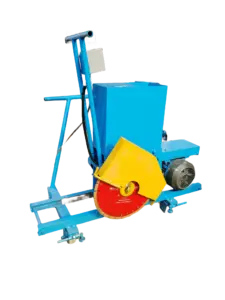
Один автоматический станок для резки сборного железобетона представляет собой специально сконструированную систему резки с алмазным диском и гидравлическим приводом, предназначенную исключительно для резки затвердевших сборных железобетонных элементов — в том числе пустотелых плит, стеновых панелей, Т-образных балок, перемычек, колонн, балок и прогонов — с высокой точностью по длине на заводе по производству сборного железобетона.
В отличие от универсальной угловой шлифовальной машины, ручной бетонорезы или режущего станка с ручным приводом, резак для сборных железобетонных плит работает в полностью автоматическом режиме после того, как оператор задаст необходимые позиции реза и запустит цикл резки. Станок перемещается по станине под действием гидравлики, выполняет каждый рез в запрограммированной точке, автоматически возвращается после каждого реза и продвигается к следующей точке реза — и всё это без необходимости присутствия оператора или его вмешательства в процесс резки.
Именно эта полная автоматизация отличает данную машину от обычных режущих станков и обеспечивает её основные преимущества в плане производительности, качества реза и охраны здоровья оператора.
Как работает система автоматического Станок для резки сборного железобетона Произведения
Сайт автоматический станок для резки сборного железобетона основана на интегрированной механической и гидравлической системе, которая преобразует мощность двигателя в точное и контролируемое движение режущего механизма.
Механическая система
Механическая система состоит из главного режущего двигателя, электрических элементов управления, механизма перемещения с зубчатой рейкой или направляющей, а также защитных кожухов вокруг режущего диска. Режущий двигатель приводит в движение алмазный диск с высокой скоростью вращения — до 2 000 об/мин — для прорезания затвердевшего железобетона с получением чистых и точных прорезов. Механизм перемещения перемещает режущую головку по горизонтали по всей ширине формовочной платформы под действием гидравлического привода с регулируемой скоростью подачи от 0 до 2,5 метров в минуту.
Гидравлическая система
Гидравлическая система является основным источником мощности автоматический станок для резки сборного железобетона. Гидравлический насос преобразует механическую энергию двигателя в гидравлическую, создавая давление масла до 16 МПа. Это масло под давлением приводит в действие гидравлические цилиндры, которые управляют горизонтальным перемещением режущей головки по всей ширине плиты, а также вертикальной подачей (глубиной врезания) пилы в бетон. Как горизонтальное, так и вертикальное перемещение осуществляются полностью в автоматическом режиме — станок входит в материал, прорезает его и возвращается обратно без какого-либо ручного усилия со стороны оператора.
Система управления
Схема низковольтного электрического управления координирует последовательность движений поперечного перемещения, погружения и возврата. Конструкция низковольтной системы управления обеспечивает приоритет безопасности оператора, сохраняя при этом простоту и надежность электрической системы. Оператор задает положения резания до начала цикла, после чего станок автоматически выполняет полную программу резания.
Полные технические характеристики
Сайт автоматический станок для резки сборного железобетона Предлагается в двух основных моделях — KZ650 и KZ1200, — которые отличаются друг от друга в первую очередь максимальной шириной реза. Основные технические характеристики:
| Параметр | Технические характеристики |
|---|---|
| Максимальная толщина реза | ≤ 220 мм |
| Толщина пропила (лезвия) | 5 мм |
| Диаметр лезвия | φ400 мм или φ500 мм |
| Скорость вращения лопасти | 2,000 RPM |
| Maximum cutting depth per pass | ≤ 10 mm |
| Main motor power | 11 kW |
| Oil pump rated pressure | 16 MPa |
| Maximum cutting width — KZ650 | ≤ 650 mm |
| Maximum cutting width — KZ1200 | ≤ 1,200 mm |
| Transverse cutting speed | 0 – 2.5 m/min (adjustable) |
| Machine weight | 600 kg |
| Overall dimensions (L × W × H) | 1,500 × 1,050 × 1,150 mm |
The choice between the KZ650 and KZ1200 models is determined by the maximum width of the precast elements being cut. For standard wall panels (600 mm wide) and most T beam and lintel profiles, the KZ650 is typically sufficient. For wider hollow core slabs or other broader precast elements, the KZ1200 provides the required cutting width capacity.
The maximum cutting thickness of 220 mm covers the full range of wall panel thicknesses produced by standard extrusion machines (60 mm to 200 mm), as well as most hollow core slab and T beam profiles used in residential and commercial construction.
Основные преимущества автоматического станка для резки сборного железобетона
Fully Automatic Operation — No Manual Intervention Required
Once the operator has set the cut positions and started the cycle, the автоматический станок для резки сборного железобетона completes the entire cutting program without any further human involvement. The machine traverses the bed, cuts at each programmed position, returns automatically, and advances to the next cut — freeing the operator to perform other tasks during the cutting cycle. This is the single most important operational advantage over manually operated cutting equipment.
2–3× Higher Cutting Efficiency
The automatic feed and traverse system, combined with the consistent cutting speed and elimination of operator fatigue, makes the резак для сборных железобетонных плит two to three times more efficient than ordinary manual cutting machines. More cuts are completed per shift, and the time between cuts is minimized by the automatic return and advance mechanism.
Precision Cut Accuracy
Hydraulic drive and rack-guided traverse deliver consistent cut positioning and perpendicularity that manual cutting cannot reliably achieve. Precise cut lengths are critical for precast elements that must fit exactly within structural frames or achieve tight dimensional tolerances for quality certification. The автоматический станок для резки сборного железобетона removes operator variability from the cutting process entirely.
Clean Cut Edges
The diamond blade cutting action at high RPM, combined with controlled feed rate, produces clean cut edges with minimal chipping or spalling on the concrete surface. Clean edges reduce or eliminate the need for remedial edge work before panels or slabs are dispatched from the factory.
Complete Dust Protection — Zero Health Risk to Operators
Manual concrete cutting exposes workers to sustained inhalation of fine concrete and silica dust — one of the most serious occupational health hazards in concrete production, associated with silicosis and other chronic respiratory diseases. Because the автоматический станок для резки сборного железобетона operates fully automatically once set up, the operator does not need to be present beside the machine during cutting. Combined with the machine’s integrated blade shields, this completely eliminates the primary pathway for concrete dust exposure during the cutting operation — protecting worker health and reducing the employer’s occupational health liability.
Simple Structure, Convenient Maintenance
Despite its automation capability, the machine’s mechanical and hydraulic systems are straightforward in design. Routine maintenance tasks — blade replacement, hydraulic oil checks, shield inspection — are accessible and uncomplicated, minimizing downtime and maintenance costs over the machine’s service life.
Safe and Reliable Low-Voltage Control
The electrical control circuit operates on a low-voltage system, reducing the risk of electrical hazards in the wet and dusty environment of a precast concrete production facility. The simple control architecture also reduces the likelihood of electrical faults and simplifies troubleshooting when issues arise.
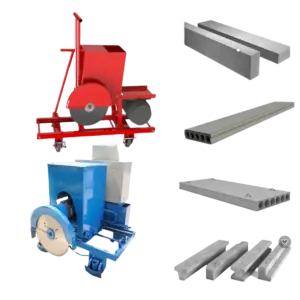
Совместимые сборные железобетонные элементы
Сайт автоматический станок для резки сборного железобетона is designed as a universal cutting solution for precast concrete production plants. It is compatible with the full range of elements produced by slip-form extrusion and casting bed methods:
Hollow Core Slabs Hollow core floor and roof slabs produced by hollow core slab extruders are one of the primary applications for the automatic cutting machine. After curing on the casting bed, the continuous slab run must be cut to the span lengths required for each building project. The YZQ1200 model accommodates the full width of standard hollow core slab profiles.
Precast Concrete Wall Panels Wall panels produced by lightweight concrete wall panel machines or wall panel extruders are cut to the floor-to-ceiling height required at each construction site. The YZQ650 model handles the standard 600 mm panel width comfortably.
Concrete T Beams and Joists Prestressed T beams produced by T beam forming machines are cut to the span lengths required for each floor or roof system. The precise cut length is critical for beam bearing and fit within the structural frame.
Concrete Lintels Precast lintels over door and window openings require precise cut lengths to fit correctly within masonry or concrete frame openings. The automatic cutting machine delivers the dimensional accuracy these elements require.
Concrete Columns and Pillars Precast columns and pillars produced by column extruder or pillar machines are cut to the required structural height after curing.
Purlins (Cement Columns) Precast concrete purlins used in agricultural buildings, industrial structures, and lightweight roofing systems are cut to the required rafter spacing lengths.
Concrete Beams Rectangular and other beam profiles produced by casting bed methods are cut to the required span lengths for structural or architectural applications.
Роль резака для сборных железобетонных плит в производственном процессе
Understanding where the резак для сборных железобетонных плит fits within the overall precast production workflow clarifies its importance to production efficiency and output quality:
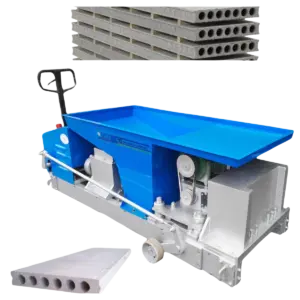
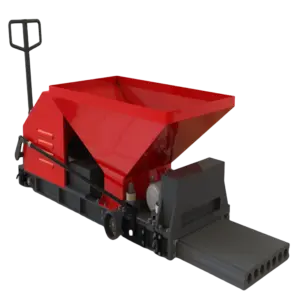
Step 1 — Extrusion / Casting The extrusion machine (wall panel extruder, hollow core slab extruder, T beam machine, etc.) produces a continuous run of elements along the full length of the casting bed.
Step 2 — Initial Curing Elements cure on the casting bed for the required period — typically 8 to 16 hours for initial set, depending on concrete mix and ambient temperature.
Step 3 — Cutting Сайт автоматический станок для резки сборного железобетона is positioned at the start of the bed. The operator marks or programs the required cut positions based on the project’s length requirements, initiates the cutting cycle, and steps back. The machine traverses the bed automatically, cutting each element to length at every programmed position.
Step 4 — Lifting and Stacking Cut elements are lifted from the casting bed — using a wall panel lifter, overhead crane, or forklift — and stacked for further curing and storage before delivery.
Step 5 — Full Curing and Dispatch Elements complete their curing period in the stack (typically 10–15 days for wall panels) before quality inspection and dispatch to the construction site.
The cutting step is the production workflow’s critical precision point. Every millimeter of cut inaccuracy becomes a dimensional defect in the finished product. The автоматический станок для резки сборного железобетона ensures this step consistently meets the required tolerances, batch after batch, without depending on individual operator skill or attention.
Выбор подходящей модели: KZ650 против KZ1200
The two primary models of автоматический станок для резки сборного железобетона differ in their maximum cutting width capacity, which determines which precast element types they can accommodate:
KZ650 — Maximum Cutting Width ≤ 650 mm The KZ650 is the standard model for most precast wall panel production lines. Standard wall panels are 600 mm wide — well within the 650 mm capacity. It also covers most T beam, lintel, column, and purlin profiles, which are typically narrower than 650 mm. For manufacturers whose primary products are wall panels and smaller structural elements, the YZQ650 delivers the required capability at a lower capital cost.
KZ1200 — Maximum Cutting Width ≤ 1,200 mm The KZ1200 is designed for production lines that include wider precast elements — most importantly, hollow core slabs. Standard hollow core slab widths are commonly 1,200 mm, and some profiles are wider. The YZQ1200 also provides future-proofing for factories that may expand their product range to include wider panel or slab formats. For comprehensive precast plants producing both wall panels and hollow core slabs, the KZ1200 is the recommended choice.
Both models share the same core specifications: 11 kW motor, 16 MPa hydraulic pressure, up to 220 mm cutting thickness, and the full automatic traverse, cut, and return cycle.
Как выбрать подходящий автоматический станок для резки сборного железобетона
When evaluating an автоматический станок для резки сборного железобетона for your production facility, consider these selection factors:
Maximum Element Width The most fundamental selection criterion. Measure the widest precast element type you currently produce or plan to produce, and select the model with a cutting width capacity that comfortably exceeds it.
Maximum Element Thickness Confirm that the 220 mm maximum cutting thickness covers all element thicknesses in your production range. For standard wall panels (up to 200 mm) and most hollow core slab profiles, 220 mm is sufficient. For thicker specialty elements, discuss requirements with the manufacturer.
Blade Diameter Selection The machine is available with either a 400 mm or 500 mm diameter diamond blade. The larger 500 mm blade increases the maximum practical cutting depth in a single pass. Select the blade diameter matched to the element thickness range you will be cutting most frequently.
Casting Bed Length Compatibility Confirm that the machine’s traverse mechanism and guide rail length are compatible with the length of your casting beds. For very long casting beds (100 m or more), discuss traverse system options with the manufacturer.
Production Volume Requirements For very high-volume production lines where cutting speed is a bottleneck, consider the transverse cutting speed range (0–2.5 m/min) in relation to the number of cuts required per bed per day and the available cutting time window in your production schedule.
Integration with Existing Production Line If you are adding a cutting machine to an existing extrusion production line, confirm dimensional compatibility between the machine and your casting bed rail system. An experienced supplier will verify this compatibility during the equipment specification process.
Часто задаваемые вопросы
Q: Does the machine require an operator to be present during cutting? A: No. Once the operator has set the cut positions and initiated the cycle, the автоматический станок для резки сборного железобетона completes all cuts in the programmed sequence without any further manual intervention. This is the defining feature that distinguishes it from ordinary cutting machines and the primary reason it eliminates concrete dust exposure for operators.
Q: What type of blade does the machine use? A: The machine uses a diamond saw blade — either 400 mm or 500 mm in diameter — rotating at up to 2,000 RPM. Diamond blades are the standard cutting tool for reinforced concrete because they cut through both the concrete matrix and the embedded steel wire or strand reinforcement cleanly and efficiently.
Q: How deep can the machine cut in a single pass? A: The maximum cutting depth per pass is 10 mm. For elements thicker than 10 mm — which includes virtually all precast slabs, panels, and beams — the machine makes multiple passes, stepping down in increments until the full element thickness is cut through. The automatic feed system manages this multi-pass cutting sequence automatically.
Q: Can the machine cut prestressed concrete elements with steel wire reinforcement? A: Yes. Diamond blades are specifically designed to cut through reinforced and prestressed concrete, including elements containing high-tensile steel wires or strands. This makes the machine fully compatible with all extrusion-produced prestressed elements.
Q: How is concrete dust managed during cutting? A: The machine’s integrated blade shields contain the dust generated during cutting, and the fully automatic operation means the operator does not need to stand beside the machine during the cutting cycle. For production environments with strict dust control requirements, water cooling or dust extraction systems can be integrated. The combination of automatic operation and blade shielding completely eliminates the sustained dust exposure that characterizes manual cutting methods.
Заключение
A резак для сборных железобетонных плит is not a peripheral accessory in a precast production line — it is a precision-critical component that determines the dimensional accuracy, product quality, and operational efficiency of everything the extrusion machines produce. An автоматический станок для резки сборного железобетона elevates this step from a manual, dusty, and inconsistent process into a fully automated, repeatable, and health-safe operation that keeps pace with the output of modern high-speed extruders.
With two models — KZ650 for wall panel and structural element lines, KZ1200 for comprehensive plants including hollow core slab production — the automatic cutting machine range covers the full spectrum of precast concrete production requirements. Combined with its 2–3× efficiency advantage over manual cutting, its precision hydraulic drive, and its complete elimination of operator dust exposure, it represents one of the most valuable supporting equipment investments in any precast concrete manufacturing facility.
For full specifications, model comparisons, and pricing on automatic precast concrete cutting machines and complete precast production line equipment, visit Чжэнчжоу KZONG Machinery Equipment Co., Ltd.