Máquina de tração de fio de aço para pré-esforço: O guia completo para máquinas de tensionamento de pré-esforço para betão pré-fabricado
Prestressed concrete is the backbone of modern precast construction. From hollow core slabs and wall panels to beams, columns, and lintels — virtually every high-performance precast element depends on one critical production step: applying precise, controlled tensile force to the steel wires or strands embedded within the concrete before it sets. That step is carried out by a prestressing steel wire tensile machine.
Without a reliable prestressing tensioning machine, it is impossible to consistently achieve the required prestress levels that give precast concrete elements their superior load-bearing capacity, crack resistance, and long-term structural performance. This guide explains how these machines work, what they are made of, their key technical parameters, the role of anchorage accessories, and how to select the right machine for your precast production line.
What Is a Prestressing Steel Wire Tensile Machine?
A prestressing steel wire tensile machine — also called a hydraulic jack tension machine, prestress tensioner, or prestressing tensioning machine — is a hydraulic device used to apply a precisely controlled tensile force to prestressed steel wires or steel strands before or after concrete is poured around them.
In the pre-tensioning method (the standard process for factory precast production), the steel wires are tensioned against fixed anchor points at both ends of a casting bed before the concrete is cast. Once the concrete reaches sufficient strength, the wire tension is released and transferred into the concrete as compressive prestress — significantly increasing the element’s ability to carry loads without cracking.
O prestressing steel wire tensile machine is the tool that applies this initial tensile force with the precision required to meet structural design specifications.
System Components of a Prestressing Tensioning Machine
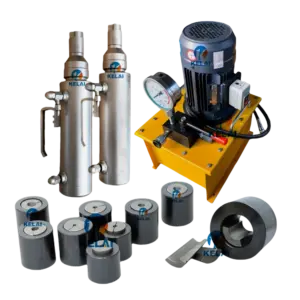
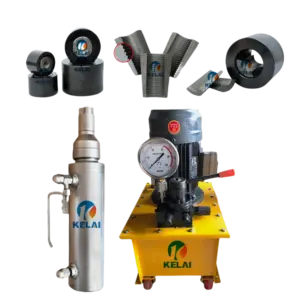
A complete prestressing tensioning machine system is not a single piece of equipment — it is an assembly of coordinated components that work together to achieve accurate, safe, and repeatable tensioning:
Tensioning Jack (Hydraulic Jack)
The core of the system. A hydraulic cylinder that applies the tensile force to the steel wire or strand. The jack is rated by its maximum tension force output, typically ranging from 50 kN to 270 kN depending on the model.
Electric Hydraulic Pump Station
Supplies high-pressure hydraulic oil to the tensioning jack. The pump station is designed with a two-stage high-low pressure system — low pressure for rapid stroke advancement and high pressure for the final tensioning load — making operation both efficient and precise.
High-Pressure Hoses
Connect the pump station to the tensioning jack, transmitting hydraulic oil at the pressures required for tensioning. The hose quality and pressure rating are critical safety components in the system.
Anchors (Anchorage Devices)
Anchor rings and wedge clamping plates that grip the steel wire at both the fixed end and the tensioning end of the casting bed. Anchors are sized to match the diameter of the wire or strand being tensioned and are one of the most critical components in the entire system.
How a Prestressing Steel Wire Tensile Machine Works: Step-by-Step
Understanding the operational sequence of a prestressing steel wire tensile machine is essential for anyone setting up or operating a precast concrete production line.
Step 1 — Wire Threading and Anchoring The steel wire or strand is threaded through the casting bed. One end is fixed to the anchor at the dead end of the bed. The other end is passed through the tensioning jack at the live end.
Step 2 — Initial Hydraulic Pressurization The hydraulic pump opens the rear oil nozzle, sending high-pressure oil into the rear of the tension cylinder. The cylinder retracts, pulling the wire and applying tensile force. The tail anchorage grips the wire, transferring the tensile load.
Step 3 — Tensioning to Target Stress The operator monitors the hydraulic pressure gauge (which corresponds to the tensile force via a calibrated conversion) and applies tension until the target prestress value is reached. This value is specified in the structural design and must be achieved accurately and consistently.
Step 4 — Anchorage Lock-Off Once the target stress is reached, the rear oil nozzle is closed. The front oil nozzle opens, allowing oil into the front of the cylinder. The piston advances forward and presses the anchor plug firmly into the anchor ring, locking the wire at its tensioned length.
Step 5 — Piston Return The piston resets by spring return, completing the tensioning cycle. The wire remains locked at the required tension, held securely by the anchor until the concrete is cast and cured.
Step 6 — Prestress Transfer After the concrete reaches its required strength, the wire tension is released. The elastic rebound of the wire is resisted by the bond between wire and concrete (and by the end anchors), transferring the compressive prestress into the concrete element.
Key Technical Parameters
When specifying or purchasing a prestressing steel wire tensile machine, the following parameters define the machine’s capability and compatibility with your production requirements:
Applicable Wire and Strand Diameter The machine must be compatible with the size of prestressing steel wire or strand used in your precast elements. Standard machines cover a range of 3 mm to 15 mm in diameter — accommodating everything from thin high-tensile wires used in wall panels to larger strands used in hollow core slabs and beams.
Maximum Tension Force Rated in kilonewtons (kN), the maximum tension force determines which precast element types and wire specifications the machine can handle. Standard models range from 50 kN to 270 kN. The correct capacity must be matched to the design prestress force required for your elements.
Pulling Stroke The distance the tensioning jack cylinder can travel during one tensioning cycle. Standard pulling strokes range from 150 mm to 1,200 mm. The stroke must be sufficient to accommodate the elastic elongation of the wire over the full length of the casting bed.
Note: Different models of prestressing tensioning machines carry different parameter combinations. Buyers should confirm specific model parameters with the manufacturer based on their production requirements.
Features and Benefits of the Hydraulic Prestressing Tensioning Machine
The hydraulic prestressing steel wire tensile machine is designed for the practical demands of precast production environments:
Compact and Lightweight Despite its high-force output, the tensioning jack is compact and light enough to be moved and positioned by one or two operators along the casting bed without lifting equipment.
Easy to Operate The control interface is straightforward — the operator manages the hydraulic pump controls and monitors the pressure gauge. No complex programming or specialist expertise is required beyond training on the tensioning procedure.
High-Low Pressure Two-Stage Pump Design The hydraulic pump station operates in two stages: low pressure for fast piston advancement (saving time during setup) and high pressure for the precise final tensioning load. This design improves efficiency and reduces operator fatigue over a full production shift.
Adjustable Clamp Stroke Speed The speed at which the clamping mechanism engages can be adjusted to suit different wire diameters and operator preferences, improving the quality and consistency of the anchoring action.
Flexible Application The machine can be used across a wide range of precast element types — hollow core slabs, wall panels, beams, columns, lintels, fence posts, and other prestressed prefabricated components — making it a versatile investment for any precast production facility.
Suitable for Complex Environments The ultra-high-pressure pump station design enables the machine to operate reliably in the varying temperature, humidity, and space conditions typical of outdoor or semi-open precast casting yards.
Prestressing Anchors: The Indispensable Accessory
No discussion of a prestressing steel wire tensile machine is complete without addressing the anchorage system. Prestressed steel wire anchorage — comprising an anchor ring and wedge clamping plates — is one of the most functionally critical components in the entire prestressing process.
Three Core Functions of Prestressing Anchors
1. Anchoring the Prestressed Steel Wires During the tensioning process, the anchor provides a temporary but highly reliable grip on the wire, allowing the hydraulic jack to apply the required tensile force. Once tensioning is complete and the prestress is established, the anchor becomes a permanent fixture — continuously transferring the tensile force from the wires into the concrete member throughout the life of the structure.
2. Prestress Force Transfer Interface The anchor is the critical interface between the steel wire and the concrete element. The tensile forces carried by the wires — which can reach hundreds to over a thousand kilonewtons — must be transferred reliably and without slippage through the anchor into the concrete. Any deficiency in anchor quality directly compromises structural performance.
3. Maintaining Long-Term Prestress After tensioning is complete, prestressed steel wires have a strong elastic tendency to retract (spring back). The anchor wedges grip the wire permanently, preventing any slippage or retraction over time. This sustained clamping capability is essential to ensure that the prestress remains effective in the structure throughout its design service life.
Anchor Sizes for Different Wire Diameters
Anchors are not one-size-fits-all. Each anchor is precision-engineered to match a specific wire diameter, ensuring the wedge clamping plates grip the wire surface correctly without damaging it or allowing slippage. Common anchor sizes available include those designed for 5 mm and 9 mm high-tensile wire, as well as 12.6 mm prestressing strand — covering the most widely used wire specifications in small and medium precast element production.
Selecting the correct anchor size for each wire specification is essential. Using a mismatched anchor risks wire slippage during tensioning, which creates both a safety hazard and a risk of non-conforming prestress levels in the finished element.
Applications: What Precast Elements Require a Prestressing Tensioning Machine?
A prestressing tensioning machine is a fundamental piece of supporting equipment for any precast production line manufacturing prestressed elements. Key applications include:
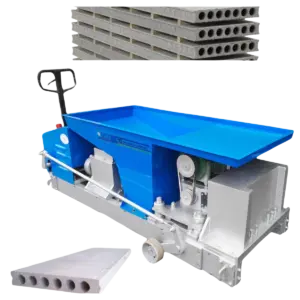
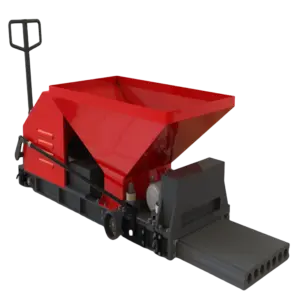
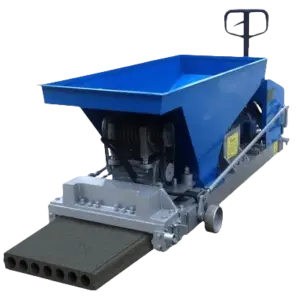
Hollow Core Slabs One of the highest-volume applications for prestressed precast concrete. Hollow core slab extruder machines require a casting bed pre-tensioned with multiple steel strands before extrusion begins.
Precast Wall Panels Both light-duty and heavy-duty precast concrete wall panels produced by wall panel extruder machines incorporate prestressed wire reinforcement for flexural strength. The prestressing steel wire tensile machine pre-tensions these wires before the wall panel extrusion begins.
Precast Beams and T-Beams Structural beams used in floors, roofs, and bridges rely heavily on prestressing to achieve the required span and load capacity.
Concrete Columns and Pillars Prestressed columns produced for boundary wall systems, building structures, and agricultural fencing all require wire tensioning prior to casting.
Concrete Lintels Precast lintels over door and window openings are commonly prestressed to carry the loads above them with minimal depth.
Concrete Fence Posts H-columns and fence posts for precast boundary wall systems incorporate prestressed wire to improve impact resistance and bending strength.
Precast Stairs and Curbs Many precast stair elements and road curb units also incorporate prestressing wire for structural efficiency.
Pre-Tensioning vs. Post-Tensioning: Which Method Uses This Machine?
It is important to distinguish between the two main prestressing methods and clarify where the prestressing steel wire tensile machine is used:
Pre-Tensioning (Factory / Casting Bed Method) Steel wires are tensioned against anchor points at the ends of the casting bed before concrete is poured. This is the standard method for factory precast production of hollow core slabs, wall panels, beams, and other elements. The prestressing tensioning machine described in this guide is the primary tool for pre-tensioning operations.
Post-Tensioning (Site / Duct Method) Steel tendons enclosed in ducts are tensioned after the concrete has been cast and cured around them, using hydraulic jacks pushing against the face of the hardened concrete element. This method is more common in large in-situ structures such as bridges and post-tensioned slabs. While hydraulic jacks are also used in post-tensioning, the anchor and jack specifications differ significantly from the pre-tensioning equipment described here.
For precast concrete factory production — hollow core slabs, wall panels, beams, columns, lintels, and fence posts — the pre-tensioning method using a dedicated prestressing steel wire tensile machine is the standard and most efficient approach.
How to Choose the Right Prestressing Tensioning Machine
When selecting a prestressing steel wire tensile machine for your production line, consider the following factors:
Wire Diameter Range Confirm the diameter(s) of prestressing wire or strand used in your elements. The machine and its anchors must be compatible with every wire size in your production range.
Required Tension Force Calculate the maximum tension force required for your largest or most heavily prestressed element. Select a machine model rated at or above this value, with an appropriate safety margin.
Casting Bed Length and Wire Elongation Longer casting beds require a greater pulling stroke to accommodate the elastic elongation of the wire over the full bed length. Match the machine’s stroke to your bed dimensions.
Production Volume High-volume production lines may benefit from machines with faster cycle times or the ability to tension multiple wires simultaneously.
Anchor Compatibility Ensure the anchor ring and wedge sets supplied are the correct size for each wire diameter in use. Mismatched anchors are a leading cause of tensioning failures.
After-Sales Support and Calibration A prestressing tensioning machine is a precision instrument. Regular calibration of the hydraulic pressure gauge against a load cell is essential to ensure tensioning accuracy. Choose a supplier that provides calibration support and spare parts availability.
Perguntas frequentes
Q: Can one prestressing tensioning machine tension multiple wires at once? A: Standard single-jack machines tension one wire at a time. For high-volume production where many wires must be tensioned simultaneously, multi-strand jacks or gang tensioning systems are available. Contact the manufacturer to discuss the options for your specific casting bed configuration.
Q: How is the correct tension force verified during operation? A: The hydraulic pressure in the pump circuit is monitored via a calibrated pressure gauge. Since the relationship between hydraulic pressure and jack output force is known from the jack’s calibration data, the operator can read the gauge and know the actual tension force being applied to the wire.
Q: How often should the machine be calibrated? A: Industry best practice recommends calibrating the hydraulic jack and pressure gauge at least once every six months, or after any incident (such as a hose failure or overload event) that could affect accuracy. Accurate calibration is critical to structural quality.
Q: What wire sizes are compatible with standard anchors? A: Standard anchor sizes cover 5 mm, 9 mm, and 12.6 mm prestressing wire and strand — the most common specifications for small and medium precast element production. Other sizes are available for specific applications.
Q: Is this machine suitable for outdoor casting yards? A: Yes. The compact, portable design of the prestressing steel wire tensile machine makes it suitable for use in both factory and outdoor casting yard environments. The high-low pressure two-stage pump design ensures reliable operation across a range of ambient conditions.
Conclusão
A prestressing steel wire tensile machine is one of the most precision-critical pieces of supporting equipment in any precast concrete production facility. Without it, it is impossible to consistently achieve the specified prestress levels that define the structural performance of hollow core slabs, wall panels, beams, columns, lintels, and other prestressed precast elements.
The hydraulic prestressing tensioning machine — comprising the tensioning jack, electric hydraulic pump station, high-pressure hoses, and correctly sized anchor assemblies — delivers the compact, portable, and accurate tensioning capability that modern precast production lines demand. Selecting the right model, matching it to your wire specifications and casting bed dimensions, and maintaining calibration discipline are the three pillars of effective prestressing operations.
For full specifications, model details, and anchor accessory options for prestressing steel wire tensile machines and complete precast concrete production line equipment, visit Zhengzhou KZONG Machinery Equipment Co., Ltd.