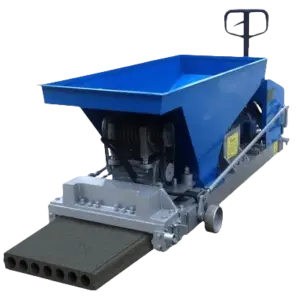
ماشین پانل دیواری بتنی سبکوزن پیشساخته: راهنمای کامل ماشینهای پانل دیواری بتنی پیشساخته
The demand for faster, lighter, and more cost-efficient building partition solutions has never been higher. Across residential apartments, office towers, hospitals, shopping centers, and industrial workshops, contractors and developers are moving away from slow, labor-intensive brick-and-mortar partition walls toward factory-manufactured precast concrete wall panels that can be installed in a fraction of the time.
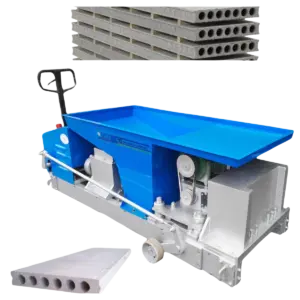
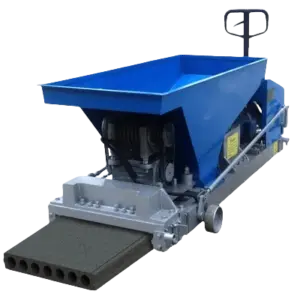
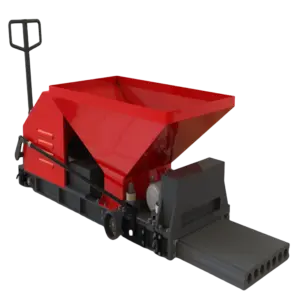
At the heart of this shift is the precast lightweight concrete wall panel machine — a purpose-engineered extrusion system that produces hollow-core or solid concrete wall panels continuously, at scale, with a smooth surface finish and dense internal structure that traditional mould-based methods simply cannot match.
This complete guide covers how the machine works, the materials it uses, panel specifications, the full production workflow, key advantages, applications, and how to select the right precast concrete wall panel machine for your factory.
What Is a Precast Lightweight Concrete Wall Panel Machine?
A precast lightweight concrete wall panel machine is an extrusion-based manufacturing system that produces non-load-bearing precast concrete wall panels — either hollow-core or solid — for use as interior and exterior partition walls in frame-structure buildings.
Unlike traditional wall panel production methods — pulling mould machines, pushing machines, or vertical wall panel mould machines — the extrusion-type precast concrete wall panel machine operates on a fundamentally different principle. Instead of filling individual moulds one at a time, the machine moves continuously along a flat casting bed, extruding and vibrating concrete into a continuous panel run that is cut to length after curing.
This distinction is what delivers the extrusion machine’s defining advantages: a wrinkle-free smooth surface on every panel, a dense and compact interior structure, and a production output that dramatically outperforms any mould-based approach.
The extrusion-type wall panel machine was first developed and manufactured in China, and has since been adopted by precast concrete producers in markets across Asia, Africa, the Middle East, and beyond as the preferred technology for high-volume partition wall panel production.
How the Precast Concrete Wall Panel Machine Works
آن precast concrete wall panel machine is built around three integrated systems working in coordination: a power system, an extrusion system, and a vibration system.
Power System
A main motor of 5.5 kW to 11 kW provides the driving power for the entire machine. The motor transmits power to the extrusion system through a gearbox, with the motor size selected based on the panel width and the number of auger cores in the extrusion system.
Extrusion System
The extrusion system is the defining feature of this machine type. It consists of three to twenty extrusion augers — helical screw elements that rotate at high speed within the machine’s forming cavity. The number of augers depends on the panel width and the number of hollow cores to be formed in the panel cross-section.
As the machine advances along the casting bed, the rotating augers simultaneously perform two functions: they compact the concrete material and they transport it forward into the forming cavity at the front of the machine. Each auger also creates one hollow core channel running through the length of the panel. This hollow core design is what gives the finished panel its lightweight characteristic — reducing panel weight by 30–40% compared to a solid panel of the same dimensions — while maintaining structural strength through the compaction effect of the auger rotation.
Vibration System
Mounted above the forming cavity is a high-frequency vibration motor connected to a vibration plate. As concrete enters the forming cavity, the vibration plate repeatedly tamps the material from above, further compacting the concrete and eliminating voids and air pockets. The combination of auger extrusion from below and vibration compaction from above produces a finished panel with a surface that is smooth and free of wrinkles, and an interior that is uniformly dense and high in strength.
As the machine moves forward, the newly formed panel is left behind on the casting bed, holding its shape without any external formwork or mould support — the self-supporting characteristic that defines the slip-form extrusion principle.
Raw Materials: Ordinary Concrete or Lightweight Concrete
One of the practical strengths of the precast lightweight concrete wall panel machine is its flexibility with raw materials. The machine is compatible with both ordinary concrete and lightweight concrete aggregate mixes — without any requirement for foamed concrete, specialty chemicals, or regionally restricted raw materials.
Ordinary Concrete Mix
The standard mix uses cement, sand, fly ash, and crushed stone — universally available construction materials in virtually every market worldwide. Wall panels produced with ordinary concrete aggregate are structurally strong and suitable for all standard partition wall applications.
Lightweight Concrete Mix
For projects where panel weight reduction is a priority — such as high-rise buildings where reducing floor-load is important, or markets where manual installation without lifting equipment is required — the aggregate can be substituted with lightweight alternatives. Commonly used lightweight aggregates include various industrial slags, recycled waste concrete, ceramsite, volcanic rock, shale, expanded perlite, and pumice.
The choice of aggregate has a significant impact on panel weight. Wall panels produced with lightweight aggregate are 30–40% lighter than those made with ordinary aggregate of the same dimensions. This weight reduction directly improves handling efficiency during installation and reduces structural loads in the building.
Because the machine works with locally available aggregates rather than proprietary materials, raw material supply is not restricted by region or country — a significant advantage for manufacturers in markets with limited specialty material supply chains.
Finished Wall Panel Specifications
آن precast concrete wall panel machine produces panels to the following standard dimensions, with customization available for specific project or market requirements:
Standard Panel Width: 600 mm
Standard Panel Thickness Options:
- 60 mm
- 75 mm
- 90 mm
- 100 mm
- 120 mm
- 150 mm
- 200 mm
Panel Length: Variable — panels are cut to any required length after curing using a concrete cutting machine. The cutting length is determined by the floor-to-ceiling height of the construction project.
Panel Type: Hollow-core (standard) or solid — both non-load-bearing, intended for use as partition walls in frame-structure buildings.
For manufacturers with specific requirements outside these standard dimensions, the machine can be customized to produce panels of different thicknesses or widths. The engineering team designs the auger configuration, forming cavity geometry, and vibration system parameters to match the target panel specification.
Complete Production Workflow: From Concrete to Delivered Panel
A precast lightweight concrete wall panel machine production line follows a structured eight-stage workflow from raw material to finished, delivered panel:
Stage 1 — Concrete Mixing
A concrete mixer — typically a forced-type pan mixer or twin-shaft mixer — prepares the concrete mix to the semi-dry consistency required for extrusion. Mixing is the first step in the production cycle and must be synchronized with the machine’s consumption rate to maintain continuous production.
Stage 2 — Concrete Transportation
An electric-powered concrete feeding dumper collects fresh concrete from the mixer and transports it to the precast concrete wall panel machine along the casting bed. The dumper feeds concrete into the machine’s hopper continuously, ensuring an uninterrupted supply to the extrusion system. Battery-powered operation eliminates exhaust fumes, making this equipment suitable for enclosed factory environments.
Stage 3 — Wall Panel Extrusion
The machine travels along the casting bed, extruding and vibrating concrete into a continuous run of wall panels. A single precast concrete wall panel machine can produce up to 500 square meters of wall panels per working day — an output level that is unachievable by any mould-based production method with comparable labor and floor space investment.
Stage 4 — Panel Cutting
After extrusion, before the concrete fully sets, or after initial curing depending on the cutting machine type, the continuous panel run is cut to the required lengths using a concrete cutting machine. The cut length corresponds to the floor-to-ceiling height specified for the construction project. Custom lengths for door openings, window heights, or special conditions are easily accommodated.
Stage 5 — Panel Lifting to Vertical
After 8 to 16 hours of initial curing on the casting bed, the panels are lifted from their horizontal casting position into a vertical orientation for stacking and storage. A dedicated wall panel lifting machine or a precast wall panel lifter is used for this operation to protect panel integrity and ensure worker safety.
Stage 6 — Panel Stacking
Panels are stacked in groups of six per pile in the factory yard. The standardized stack size is optimized for forklift handling — making yard management, inventory control, and loading operations efficient and organized.
Stage 7 — Curing and Quality Control
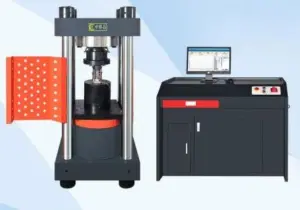
Stacked panels are cured in the factory for 10 to 15 days before delivery. This curing period allows the concrete to develop its full design strength and ensures that panels arrive at the construction site with the structural and dimensional properties required for installation.
Stage 8 — Delivery and Installation
Once fully cured and quality-checked, panels are transported to the construction site. On-site, the panels are installed as interior or exterior partition walls in frame-structure buildings using a wall panel installation machine, installation robot, or installation trolley — depending on the panel weight and building type.
Key Advantages of the Extrusion-Type Precast Concrete Wall Panel Machine
The extrusion principle distinguishes the precast lightweight concrete wall panel machine from all traditional mould-based approaches, and underpins a set of advantages that define its commercial value:
Superior Surface Quality
The combination of auger extrusion and high-frequency vibration compaction produces a panel surface that is smooth and free of the wrinkles, honeycombing, or surface defects common in mould-cast panels. This reduces or eliminates the need for surface preparation work before plastering or painting on-site — saving time and cost.
High Internal Density and Strength
The dual compaction mechanism — mechanical extrusion from the augers and vibration from the vibration plate — creates an internal concrete structure that is denser and more compact than hand-filled mould casting. This improves compressive strength, reduces water absorption, and enhances the durability of the finished panel.
No Moulds Required
The slip-form extrusion process produces panels on a flat casting bed without any individual panel moulds. There is no cost of mould procurement, no mould storage space required, no mould stripping labor, and no mould maintenance or replacement cycle. This dramatically reduces both the capital investment and the ongoing operational cost per square meter of panel produced.
High Production Output — Up to 500 m² Per Day
A single machine can produce up to 500 square meters of wall panels per working day. This output level, with a minimal crew, makes the precast concrete wall panel machine one of the most productive wall panel manufacturing solutions available at its scale.
Flexible Panel Length
Because panels are cut from a continuous run after curing, there is no fixed panel length constraint. Any required cut length can be produced from the same casting run, making the system highly adaptable to the varying ceiling heights and opening dimensions of different construction projects.
Lightweight Panel Option
By switching to lightweight aggregate in the concrete mix, the same machine produces panels that are 30–40% lighter than standard aggregate panels. This weight reduction is significant for high-rise construction, for markets where panels must be handled manually, and for projects where reducing building self-weight is a structural priority.
Material Flexibility
The machine works with locally available aggregates — no specialty or proprietary raw materials are required. This keeps raw material costs low and supply chains simple, regardless of the manufacturing location.
Wide Range of Thickness Options
From 60 mm to 200 mm, the range of standard panel thicknesses covers the full spectrum of partition wall applications — from thin internal room dividers to thicker external or acoustic partition walls.
Applications: Where Are These Wall Panels Used?
Wall panels produced by the precast lightweight concrete wall panel machine are non-load-bearing elements designed for use in frame-structure buildings. Key application categories include:
Interior Partition Walls in Residential Buildings Apartments, condominiums, and housing estates use precast concrete wall panels for internal room partitions — replacing traditional brick-and-block internal walls with faster, lighter, and more consistent precast alternatives.
Interior and Exterior Partition Walls in Office Buildings Open-plan office fit-outs use precast panels to create flexible, high-quality partition walls. The smooth surface finish of extrusion-produced panels reduces the preparation work required before painting or cladding.
Hospital and Healthcare Facility Partitions Hospitals require partition walls that are dimensionally precise, dense, and durable — properties that the extrusion machine delivers consistently. Panels can be produced to the specific thicknesses required for medical-grade wall systems.
Shopping Centers and Commercial Buildings Retail and commercial fit-outs use precast panels for high-speed partition installation in large-footprint buildings where speed of enclosure is critical to the project timeline.
Industrial Workshops and Warehouses Factory and warehouse partition walls — for office areas, control rooms, and internal divisions — benefit from the durability and speed of installation of precast concrete panels.
Precast Boundary Walls In addition to building partition applications, precast concrete wall panels from this machine type can also be used in boundary wall systems, providing a versatile product range from a single production line.
Foundation Templates Panels can serve as permanent formwork or foundation templates in certain construction applications, expanding the addressable market for the production facility.
Full Equipment Line for a Precast Wall Panel Factory
A complete precast concrete wall panel machine production line requires the following equipment working in coordination:
Precast Wall Panel Extruder Machine — The core extrusion machine that produces the wall panels.
بتونیر — Pan mixer or twin-shaft mixer for preparing the concrete mix.
Electric Concrete Feeding Dumper — Battery-powered dumper with belt conveyor for transporting fresh concrete from the mixer to the extruder.
Concrete Cutting Machine — Diamond blade cutting machine for cutting cured panels to the required lengths.
Wall Panel Lifting Machine / Precast Wall Panel Lifter — For lifting panels from the horizontal casting position to vertical for stacking, and for loading onto transport vehicles.
Wall Installation Machine or Installation Trolley — On-site equipment for precise panel positioning and installation in the building frame.
ماشین برش خودکار — For higher-volume operations requiring faster or more automated cutting workflows.
The full equipment line can be supplied as a complete turnkey package, ensuring compatibility between all machines and simplifying commissioning and operator training.
How to Choose the Right ماشین پانل دیوار بتنی سبکوزن پیشساخته
When evaluating a precast lightweight concrete wall panel machine for your factory, consider these key selection factors:
Target Panel Thickness Range Define the panel thickness or range of thicknesses you need to produce for your target market. The machine’s auger and forming cavity configuration is designed around the panel thickness — confirm that the machine can produce all the thicknesses required.
Panel Width Requirement Standard panel width is 600 mm, which matches the most widely used module in the markets where this technology is most deployed. If a different width is required, confirm whether the manufacturer can customize the machine accordingly.
Motor Power and Production Capacity The motor size (5.5 kW to 11 kW) is matched to the panel width and number of augers. For higher daily output targets, confirm the machine’s rated daily production capacity against your market demand projections.
Ordinary or Lightweight Aggregate If panel weight reduction is a priority for your market, confirm that the machine design and auger specifications are appropriate for the lightweight aggregate type you plan to use.
Hollow-Core or Solid Panel Standard extrusion machines produce hollow-core panels. Confirm whether your market requires hollow-core or solid panels, and whether the same machine can produce both by adjusting the auger configuration.
Customization Requirements If standard panel dimensions do not match your market requirements, engage the manufacturer’s engineering team early to discuss custom machine design. Custom dimensions require a longer lead time and design confirmation process.
Complete Line vs. Individual Machines Assess whether you need a complete turnkey production line or specific machines to complement equipment you already have. A full-line supplier can ensure all equipment is matched and compatible.
After-Sales Technical Support Extrusion machine performance depends on proper setup, operator training, and ongoing maintenance. Choose a manufacturer that provides commissioning support, operator training, and accessible spare parts supply — especially important for international buyers.
سوالات متداول
Q: What is the daily production output of a precast concrete wall panel machine? A: A single machine can produce up to 500 square meters of wall panels per working day. Actual output depends on the casting bed length, panel thickness, curing approach, and the efficiency of the concrete supply system.
Q: Do the panels require any surface finishing after production? A: The extrusion and vibration compaction process produces a smooth, wrinkle-free surface finish on both faces of the panel. In most applications, panels can be directly plastered, painted, or tiled without additional surface preparation work.
Q: Are the wall panels load-bearing? A: No. Panels produced by this precast lightweight concrete wall panel machine are non-load-bearing elements, designed for use as interior and exterior partition walls in frame-structure buildings where the structural loads are carried by the frame — columns and beams — not the walls.
Q: How long does the concrete need to cure before panels can be delivered? A: Panels should be cured in the factory for 10 to 15 days before delivery to ensure full concrete strength development. Initial curing on the casting bed takes 8 to 16 hours before panels can be lifted to vertical for stacking.
Q: Can the machine produce panels of different thicknesses without a complete machine change? A: Typically, each machine is configured for a specific panel thickness or a narrow range of thicknesses. Producing significantly different thicknesses generally requires a different auger and forming cavity configuration. For factories requiring multiple thicknesses, separate machines or interchangeable forming systems are options to discuss with the manufacturer.
نتیجهگیری
The extrusion-type precast lightweight concrete wall panel machine represents a generational advance over traditional mould-based wall panel production. By combining high-speed auger extrusion with high-frequency vibration compaction, it delivers panel surface quality and internal density that mould casting cannot match — at a production output of up to 500 square meters per day, with minimal labor and no mould investment.
Whether you are building a new precast concrete panel factory from the ground up or upgrading an existing operation, a purpose-built precast concrete wall panel machine — supported by the right concrete mixing, feeding, cutting, lifting, and installation equipment — positions your business to serve the rapidly growing market for fast, lightweight, and high-quality precast partition wall systems.
For full machine specifications, panel dimension options, complete production line packages, and pricing, visit شرکت ماشینآلات و تجهیزات KZONG ژنگژو.